 Easiest travel
Cool dry
December to February
- January high
- 30.8 °C
- Rainy days
- 6 in Jan and Feb
- Good for
- Road days
Guides
Language
EnglishCurrency
US dollar · $Your currency applies on GetYourGuide too.
Guide · Best time
Moalboal is warm all year, so the real question is rain. Here is the best time to visit Moalboal for the reef, the waterfalls and the Oslob whale sharks, with the monthly figures of the nearest weather station.
Editorial team, moalboalwhaleshark.comUpdated October 22, 2026Read time: 6 min14 sources
The short answer
The national weather service, PAGASA, works with just two seasons: rain from June to November, dry weather from December to May, with the dry half itself split into cooler months (December to February) and hotter ones (March to May).4 For Moalboal, Cebu Provincial Tourism draws the same line: December to May is ideal for diving, snorkeling, beach activities and sightseeing, while June to November brings occasional rain that may affect marine and outdoor activities.1
Temperature barely moves through the year, so it is rain, sea state and humidity that shape a visit. At the nearest station with a complete record, the average daily high stays between 30.8 °C in January and 33.2 °C in May.2 Nights are warm too, with average lows from 23.2 °C to 24.7 °C.2
That station is Tagbilaran, on the neighboring island of Bohol; there is no complete record closer to Moalboal.2 Treat its numbers as the regional pattern rather than a forecast for Panagsama. Local showers can differ from one coast to the next, but the shape of the year, a drier spring and a wetter autumn, matches the national seasons PAGASA describes.4
The Moalboal year
Dec to Feb
PAGASA's coolest part of the dry season.4
Mar to May
Driest in April, hottest in May.2
Mid-May
Street dancing for the town's patron saint.5
Jun to Nov
Occasional rain may affect marine activities.1
Oct to Dec
154 mm, 146 mm and 175 mm of rain.2
January and February are the gentlest months: highs of 30.8 °C and 31.3 °C, lows of 23.2 °C and 23.4 °C, and 6 days of real rain in each.2 This is the cool dry season in PAGASA's terms, good for long days on the road to Oslob or Kawasan as well as on the reef.4
March to May is the hot dry season. April is the driest month on the record, with 56 mm of rain and only 3 days reaching 2.5 mm, and May the hottest, at a high of 33.2 °C.2 PAGASA warns that heat and humidity make March to May especially uncomfortable, so plan swims for early morning and late afternoon.6
From June the rain builds: 131 mm in June, 150 mm in July, and a wet stretch from October to December, with 154 mm, 146 mm and 175 mm.2 November has the most rainy days, 11.2 August stands out as a calmer month in the middle, with 101 mm.2
Month by month
The climate table
| Month | Daylight (h) | Darkness (h) | High / low | Wet days | PAGASA season |
|---|---|---|---|---|---|
| Jan | 11.6 | 12.4 | 31 / 23 °C | 6 | Cool dry |
| Feb | 11.8 | 12.2 | 31 / 23 °C | 6 | Cool dry |
| Mar | 12.1 | 11.9 | 32 / 23 °C | 6 | Hot dry |
| Apr | 12.3 | 11.7 | 33 / 24 °C | 3 | Hot dry |
| May | 12.6 | 11.4 | 33 / 25 °C | 6 | Hot dry |
| Jun | 12.7 | 11.3 | 33 / 25 °C | 8 | Rainy season |
| Jul | 12.7 | 11.3 | 32 / 25 °C | 9 | Rainy season |
| Aug | 12.5 | 11.5 | 33 / 25 °C | 6 | Rainy season |
| Sep | 12.2 | 11.8 | 32 / 24 °C | 7 | Rainy season |
| Oct | 11.9 | 12.1 | 32 / 24 °C | 10 | Rainy season |
| Nov | 11.7 | 12.3 | 32 / 24 °C | 11 | Rainy season |
| Dec | 11.5 | 12.5 | 32 / 24 °C | 9 | Cool dry |
Station Tagbilaran on Bohol, 1991 to 2020, April from 1971 to 2020: daylight in mid-month, the usual afternoon high and overnight low, and on how many days at least 2.5 mm of rain fell.2 Season according to PAGASA.4
Three seasons
Easiest travelDecember to February
 Driest
 Pack flexibility
Decision helper
Pick what matters most on this trip
The climate of the country can be divided into two major seasons: the rainy season, from June to November; and the dry season, from December to May.
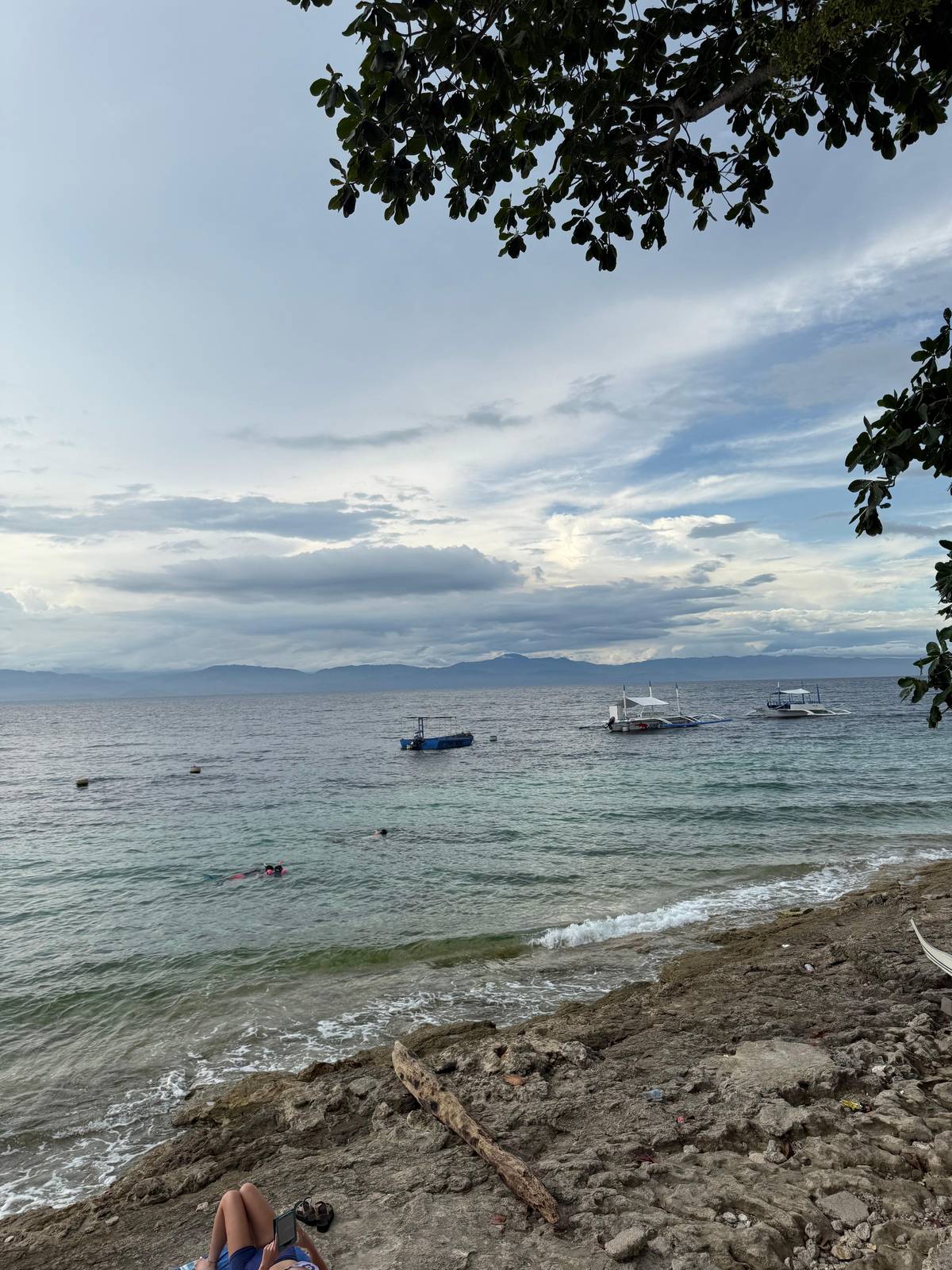
The reef off Panagsama does not close for the season. Cebu Provincial Tourism describes the sardines as a year-round sight, and the municipality places them a few meters from the shore.89 What changes with the weather is the water itself: after heavy rain or in strong wind, visibility can drop and the entry over the stones gets rougher.
Whatever the month, the hour matters more. The municipality recommends going between 7 and 9 AM, when the water is at its clearest, and says the turtles are easiest to find in the morning or early afternoon.910 In the rainy months that early swim also keeps you ahead of any afternoon shower, and the rest of your day can stay dry.
Boat trips are more sensitive than snorkeling from the shore. The municipality asks visitors to check weather and sea conditions before island hopping, and a rough sea can cancel a trip to Pescador Island.11 In the wet season, keep the island-hopping day flexible and use the shore reef on the days the boats stay in.
Checklist
Video
Nothing loads until you tap play.
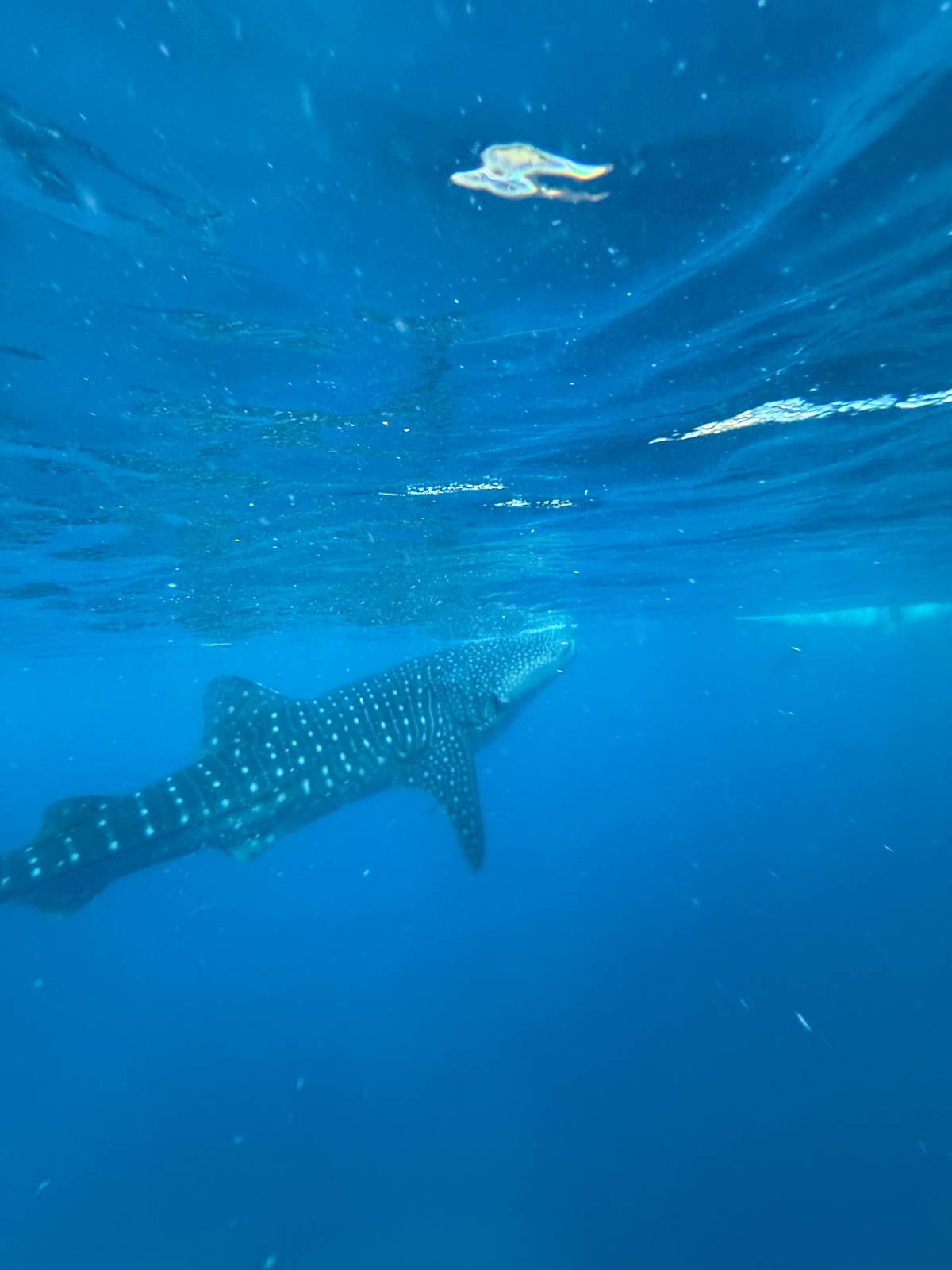
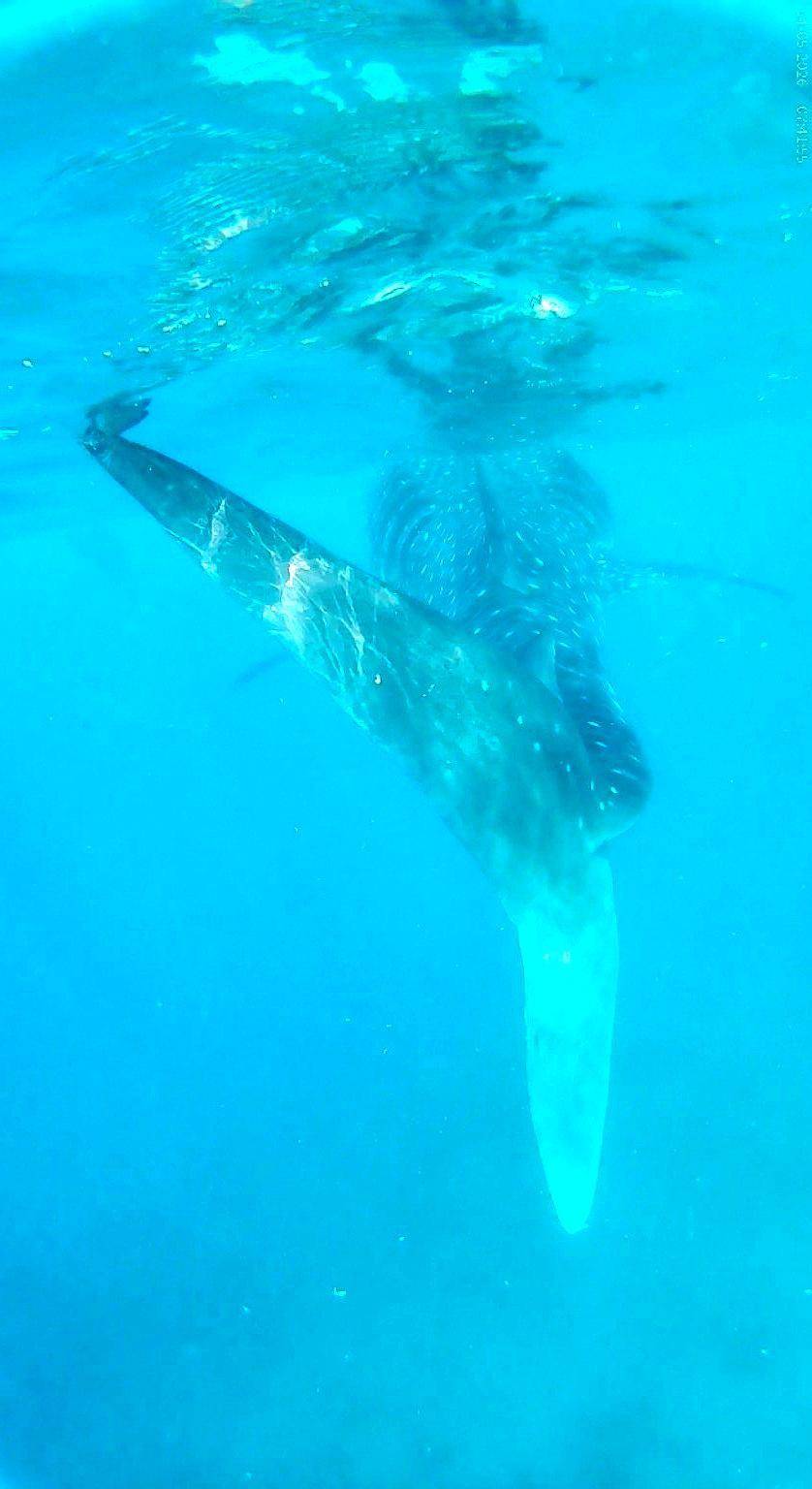
The whale sharks are at Oslob, on the other coast, and the province says December to May is when the seas there are calmest for swimming with them.3 They are present at Tan-awan all year, because they are fed there by the local tourism association, so the season affects comfort and sea state more than your chance of seeing them.12
Busy periods bring queues. The booked combo warns of a wait averaging 2 to 3 hours for the whale shark swim in peak season, and several sellers describe the site as first-come, first-served. Whatever the month, an early start is part of the plan; the booked combo collects shared guests between 2:00 and 3:00 AM.
If your dates fall in the rainy season, give yourself room. The drive from Moalboal takes about 2 hours by van, and wet roads make it slower. A two-day plan with a night in Moalboal leaves space to move the Oslob morning by a day if the weather turns.
Rivers react to rain faster than the sea. Cebu Provincial Tourism calls December to May Badian's dry season, ideal for canyoneering, trekking and waterfall activities, and warns that heavy rain from June to November may affect river-based activities.7
The canyoneering listings build that into their terms. The most reviewed tour needs good weather and offers another date or a full refund if poor weather cancels it. Another says tours may be rescheduled or canceled for safety reasons. In the wet months, book canyoneering early in your stay so a postponed date still fits.
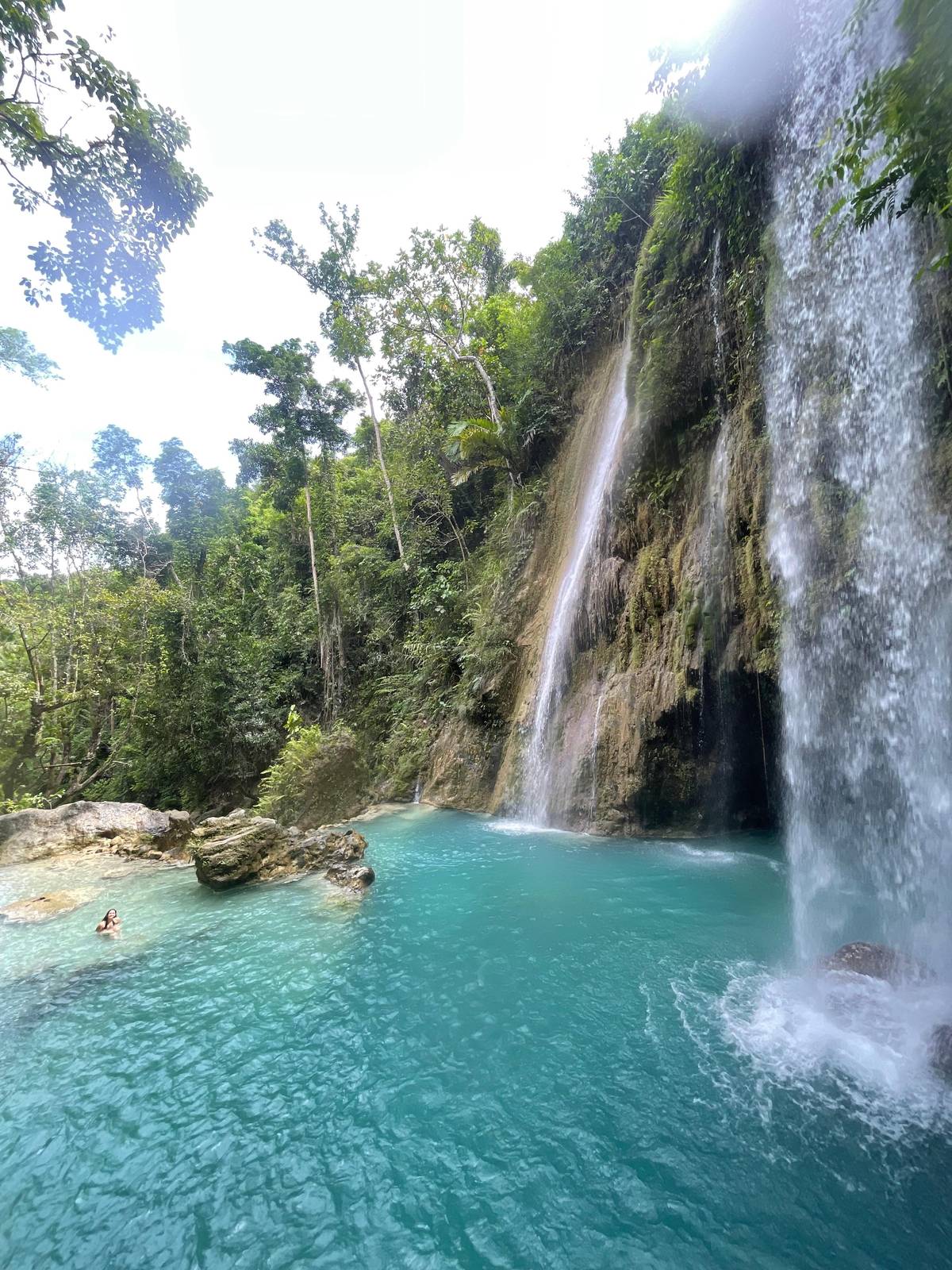
If you only want to look and swim at the pool below the falls, a wet-season visit can still work on a settled day. For the full canyon route, though, the dry months are the safer bet, and the turquoise water Kawasan is known for is at its most photogenic under a clear sky.13
Moalboal sits close enough to the equator that day length barely changes. At the station's latitude, the sun is above the horizon for 11.5 hours in mid-December and 12.7 hours in mid-June and July.2 Sunset comes early all year, so plan your Panagsama evening for the late afternoon rather than after dinner.
Heat is the steadier challenge. With an average high of 30.8 °C even in January and PAGASA's warning about March to May, shade, water and a hat matter more than layers.26 Inside a van at dawn the air conditioning can feel cold, which is the one time a light long-sleeved shirt earns its place in the bag.
Typhoons are the risk to respect. PAGASA says they have a great influence on Philippine weather and bring a great portion of its rain, humidity and cloud.14 If a storm is forecast during your stay, follow local advice, expect boats and canyoneering to pause, and keep your travel dates flexible where you can.
If you can travel any time, aim for the cool dry months of December to February. The road days to Oslob and Kawasan are easier in the milder heat, the province names the whole stretch from December to May as the best for the reef and the beach, and January carries only 82 mm of rain on the record.412
If you want the driest weather of all, choose April, and accept the heat that comes with it: 56 mm of rain, but highs of 33 °C and PAGASA's warning about humidity.26 Plan the day around it. Swim at dawn, rest under a roof through the middle of the day, and head back to Panagsama for the evening light.
If your only window is the rainy season, come anyway, but build slack into the plan. Book the Oslob morning and the canyoneering with free cancellation; the booked combo and the most reviewed canyoneering tour both allow it up to 24 hours before. Keep the shore reef at Panagsama as the activity that rarely needs rescheduling, and save the boat day for the calmest forecast of your stay.
Your dawn date
Choose your morning now and settle up later; plans can still change free of charge until a day ahead.
December to May, the dry season. Cebu Provincial Tourism names those months as ideal for diving, snorkeling and the beach.1
April. 56 mm of rain and 3 rainy days at the nearest station.2
December. 175 mm of rain at the nearest station, with 9 rainy days.2
About 33 °C at midday. May's average daily high is 33.2 °C.2
Yes. The province describes them as a year-round sight.8
No, but the sea is. They stay at Oslob all year; December to May brings the calmest seas.123
Tagbilaran, on Bohol. It is the nearest station with a complete NOAA record.2
Sources
Keep reading